The Interplay Between Encryption Protocols and Jackpot Accumulation Mechanics in App-Based Gaming Environments
Sam Washington · Oct 14, 2026
The Interplay Between Encryption Protocols and Jackpot Accumulation Mechanics in App-Based Gaming Environments
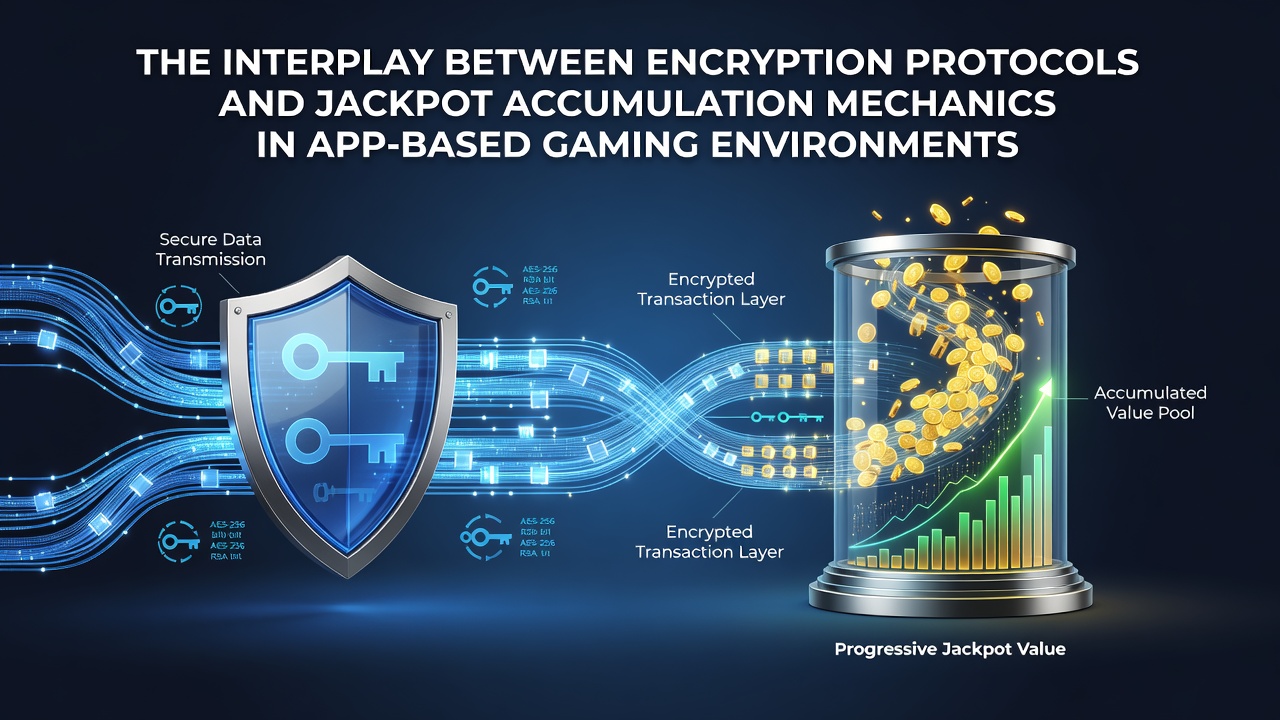
App-based gaming environments rely on continuous data exchanges between player devices and central servers, and these exchanges must remain protected while jackpot pools grow in real time. Encryption protocols secure the transmission of contribution amounts from each wager, the verification of player eligibility, and the final distribution of winnings, all without exposing the underlying accumulation totals to interception or manipulation. Researchers at institutions focused on applied cryptography have documented how symmetric and asymmetric methods combine to maintain integrity across distributed networks that support progressive and fixed jackpot structures alike.
Core Encryption Standards Supporting Mobile Gaming Systems
Transport Layer Security version 1.3 serves as the primary channel for app-to-server communications, establishing session keys that encrypt every packet containing bet data and jackpot increments. AES-256 encryption then protects stored records of accumulated totals on backend databases, ensuring that even if physical media is compromised the values remain inaccessible without the corresponding key hierarchy. The National Institute of Standards and Technology maintains detailed specifications for these algorithms, and many gaming platforms adopt the latest revisions to align with federal guidelines on cryptographic modules. Observers note that key rotation schedules, often executed every few hours during high-volume periods, reduce the window during which any single key could be exploited.
Mechanics of Jackpot Accumulation in Application Environments
Jackpot accumulation begins when a fraction of each qualifying wager is routed to a central pool managed by the game operator's servers. In app-based implementations this fraction travels through encrypted API calls that also carry device identifiers and session tokens, allowing the system to validate the contribution before adding it to the running total. Progressive jackpots aggregate across thousands of simultaneous sessions, while fixed jackpots draw from predefined prize tables that still require encrypted audit trails for regulatory compliance. Data from industry monitoring services indicate that peak accumulation rates in popular titles can exceed several hundred contributions per second, necessitating low-latency cryptographic operations that do not delay gameplay.
Integration Points Where Encryption Directly Influences Jackpot Integrity
Every time an app transmits a wager, the payload undergoes hashing with SHA-256 before encryption, creating a verifiable checksum that the server uses to confirm no alteration occurred during transit. If the hash fails verification, the contribution is rejected and the jackpot total remains unchanged, preventing both accidental corruption and deliberate tampering. Multi-party computation techniques appear in some newer deployments, allowing the system to calculate new jackpot values without any single server holding the complete set of inputs in plaintext. Experts tracking these implementations report that such methods add measurable overhead yet deliver stronger guarantees against insider threats.
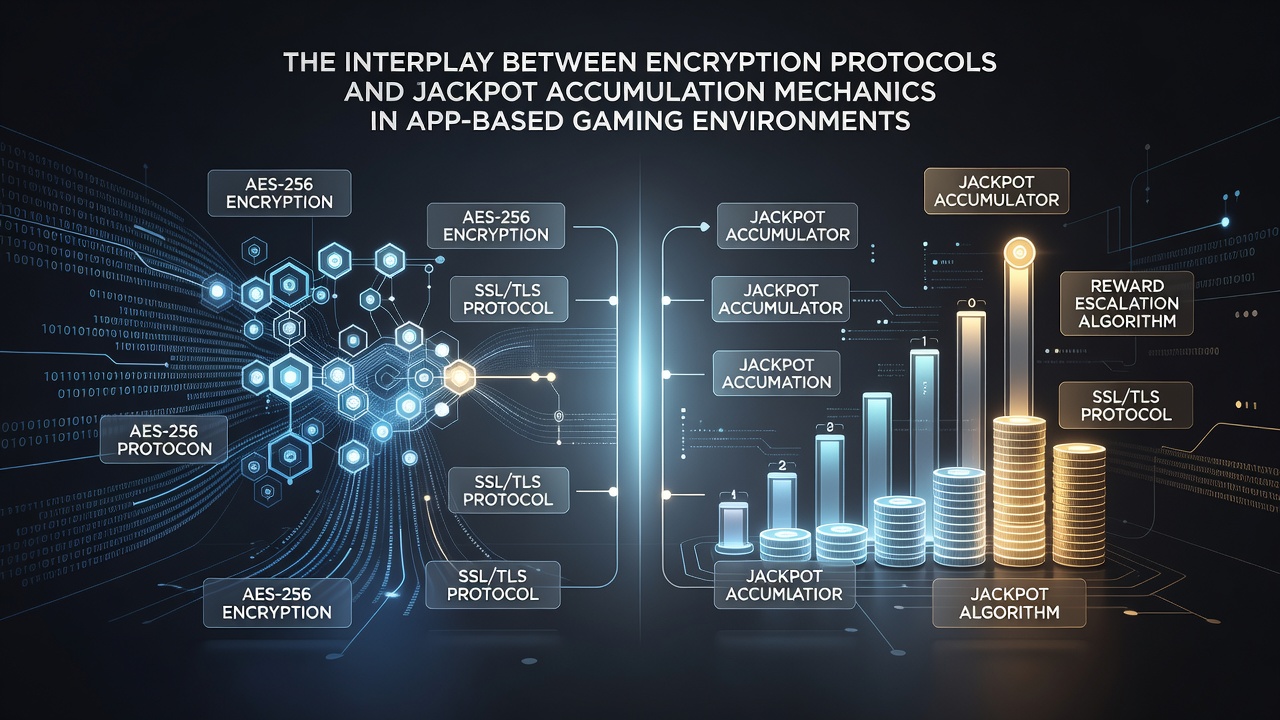
Random number generators certified under international testing standards feed into both game outcomes and the selection of jackpot triggers, and the seeds for these generators travel inside the same encrypted tunnels used for financial data. In October 2026 several testing laboratories introduced updated certification suites that explicitly require proof of encryption strength during RNG evaluation, tightening the link between cryptographic controls and prize distribution fairness. Those who have examined the revised protocols note that the additional documentation requirements focus on key management logs and forward-secrecy properties rather than on the RNG algorithms themselves.
Regional Regulatory Approaches to Secure Jackpot Systems
Authorities in multiple jurisdictions mandate that encryption configurations undergo periodic audits before operators receive or renew licenses. The Malta Gaming Authority, for example, publishes technical specifications that reference current NIST curves and require evidence of perfect forward secrecy in all client-server handshakes. Australian state regulators have incorporated similar language into their digital gaming codes, emphasizing that jackpot ledgers must remain encrypted both in transit and at rest. Industry associations such as the European Gaming and Betting Association compile comparative tables showing how these requirements differ across borders, helping developers maintain compliant implementations without duplicating audit efforts.
Performance Considerations and Protocol Evolution
Although strong encryption adds processing steps, modern mobile processors handle AES instructions in hardware, keeping the added latency below perceptible thresholds for most users. Developers optimize by batching small jackpot contributions into larger encrypted frames that amortize the cost of each TLS handshake. Research papers from computer science departments at universities in Canada and Singapore have modeled these trade-offs, demonstrating that session resumption mechanisms introduced in TLS 1.3 yield the largest gains in high-frequency environments. When network conditions degrade, fallback to slightly weaker but still approved cipher suites occurs automatically, preserving both security baselines and gameplay continuity.
Conclusion
Encryption protocols and jackpot accumulation mechanics operate as interdependent components within app-based gaming platforms, wth each cryptographic control directly supporting the accuracy, confidentiality, and auditability of prize pools. Continued refinement of standards by bodies such as NIST, coupled with regional regulatory updates, ensures that the technical foundation remains aligned with emerging threats. As mobile architectures evolve, the same principles of authenticated encryption and verified contribution flows continue to underpin the operational trust placed in these systems by operators and players worldwide.